ATEX vs IECEx: which one applies to equipment on ships and offshore units?
ATEX is European law, and it excludes seagoing vessels and mobile offshore units. Here is what IECEx is, what ships and offshore units are actually held to, and how to specify hazardous-area equipment correctly.
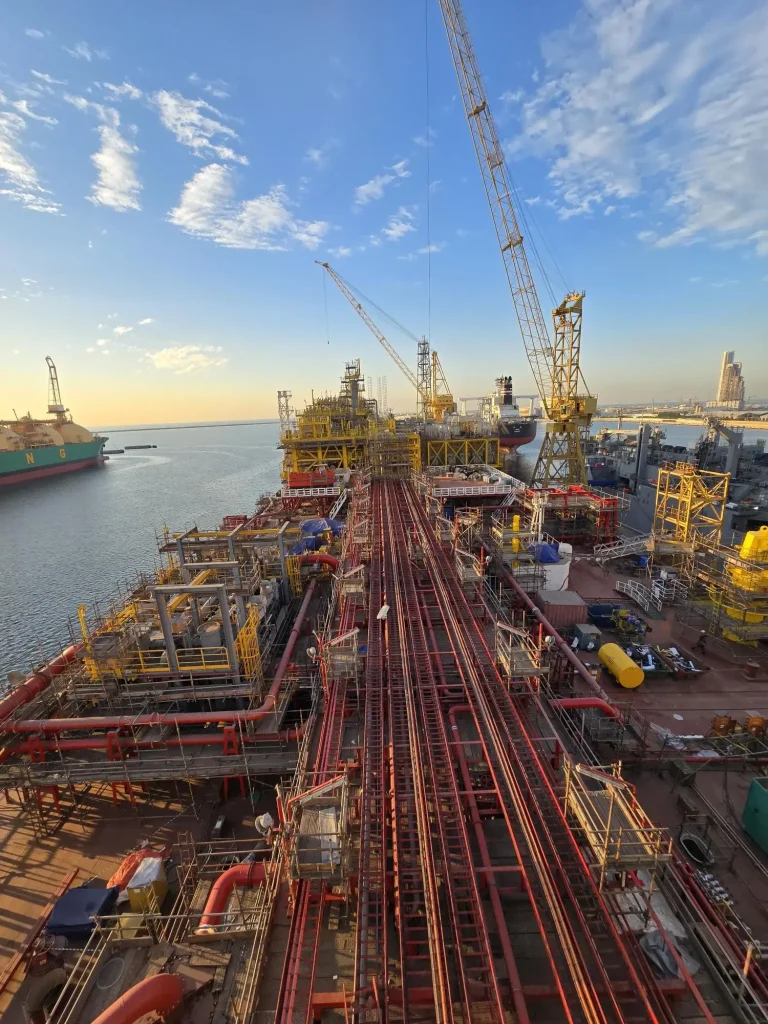
On the datasheet of any camera, telephone or light fitting made for hazardous areas, two terms almost always appear together: ATEX and IECEx. Many people treat them as equivalent. For equipment on ships and offshore units the difference matters: ATEX is European Union law, and it expressly does not apply to seagoing vessels and mobile offshore units. IECEx is an international certification system built on the IEC 60079 standards, designed so that one certificate can be accepted in many countries.
ATEX is European law. IECEx is a certificate you can check.
In short
- ATEX is Directive 2014/34/EU. It is law for products placed on the EU market, and it excludes seagoing vessels, mobile offshore units and the equipment on board them.
- IECEx is not law. It is a voluntary certification system run under the IEC. Independent certification bodies test equipment against the IEC 60079 series and issue certificates that anyone can check in the IECEx online database.
- At sea, what binds you is the flag state, the classification society’s rules and the facility operator, not ATEX.
- Both rest on the same family of technical standards: IEC 60079, and its European versions, EN 60079.
What is ATEX?
ATEX comes from Directive 2014/34/EU on equipment and protective systems for potentially explosive atmospheres. Products sold on the EU market must comply, and carry the CE mark and the Ex marking. The Directive sorts equipment into categories 1, 2 and 3 by how often an explosive atmosphere is expected, from continuously or frequently (category 1) to unlikely and only for a short time (category 3).
How conformity is proved depends on the category. Category 1, and category 2 electrical equipment such as cameras, telephones and lights, needs an EU-type examination by a notified body. Category 3 only needs the manufacturer’s own internal production control, so the manufacturer declares conformity itself and no third-party certificate exists. That is why “ATEX certified” does not always mean independently tested.
What is IECEx?
IECEx is the IEC’s conformity assessment system for equipment used in explosive atmospheres. IECEx itself does not test or certify anything. That work is done by independent Ex certification bodies (ExCBs) that the system approves: a test laboratory tests the equipment, the certification body assesses the manufacturer’s quality system, and it then issues the Certificate of Conformity. Every valid certificate is listed in a single online database, so a buyer can check it directly.
Beyond equipment, IECEx also certifies service facilities that install, inspect and repair Ex equipment, and the competence of the people who do that work.
What applies on ships and offshore units?
Article 1(2)(e) of Directive 2014/34/EU says the Directive does not apply to “seagoing vessels and mobile offshore units together with equipment on board such vessels or units”. The exclusion covers vessels and mobile units, so fixed platforms are not part of it.
At sea, the rules that bind come from elsewhere:
- The flag state and IMO codes. For mobile offshore drilling units, Chapter 6 of the 2009 IMO MODU Code sets a standard for independent testing and certification of electrical equipment installed in hazardous areas, based on the IEC 60079 series. IECEx is one route to meeting it.
- The classification society. Ships and offshore units follow their society’s rules (for example DNV, ABS, Lloyd’s Register or BKI). Class rules such as ABS’s require electrical equipment in a hazardous area to be Ex-rated for the classification of the area where it is installed.
- The installation standards. IECEx points to the IEC 60092 series for ships and the IEC 61892 series for offshore units.
Flag administrations also differ. In 2012 the US Coast Guard noted that some flag administrations did not impose the IEC 60079 series and instead accepted ATEX certification, which does not specifically require testing by an independent third-party laboratory. It favoured independent laboratory testing for mobile offshore drilling units.
How to specify the equipment
- Start from the hazardous area classification: the zone (0, 1 or 2 for gases and vapours; 20, 21 or 22 for dust), the gas group (IIA, IIB or IIC) and the temperature class (T1 to T6).
- Match the equipment protection level. Zone 1 needs EPL Gb, Zone 2 can use EPL Gc, and Zone 0 needs EPL Ga.
- Ask for the IECEx Certificate of Conformity number and check it in the IECEx online database. The product, gas group, temperature class and validity must all match.
- Confirm that the classification society and the flag state accept that evidence, and whether separate class approval is required.
- If the product only has ATEX, check its category, and whether it holds a notified-body certificate or only a manufacturer’s declaration.
In Indonesia
The IEC 60079 series is the technical base, and Indonesia’s national standards body, BSN, has adopted part of it as SNI. ATEX, as European law, does not bind a vessel or platform operating in Indonesian waters, although ATEX-marked equipment is often supplied alongside. The evidence a project accepts is set by its classification society, its flag administration and the facility operator. A purchase specification should therefore name the certificate it requires, for example IECEx with a stated EPL and gas group.
Vivo Asia supplies hazardous-area equipment for maritime and energy projects, including explosion-proof cameras and the ExSite thermal camera range. Send us your area classification and the class requirements of your vessel or unit, and our team will help match the equipment. Contact our team, or browse the product catalogue.
Sources
- Directive 2014/34/EU, Article 1 (scope and exclusions), Article 13 (conformity assessment) and Annex I (categories)
- IECEx: About us
- US Coast Guard, Federal Register, 3 December 2012: MODU Electrical Equipment Certification Guidance