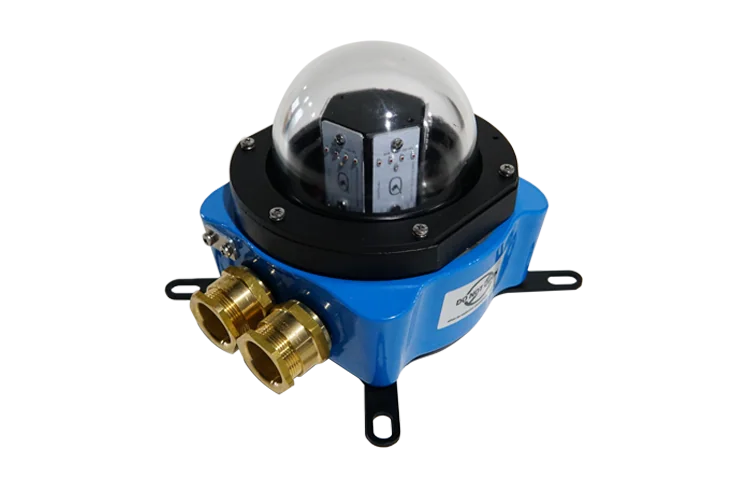
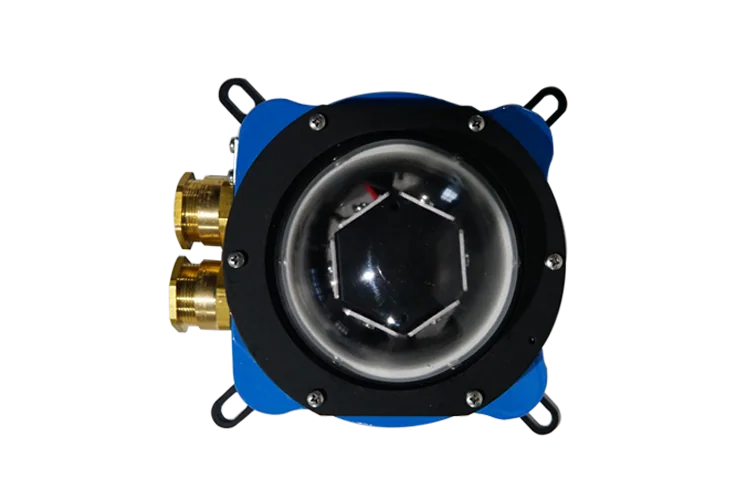
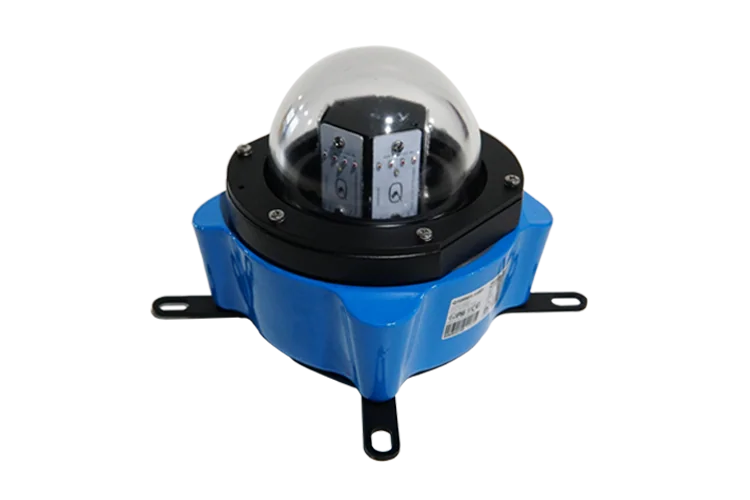
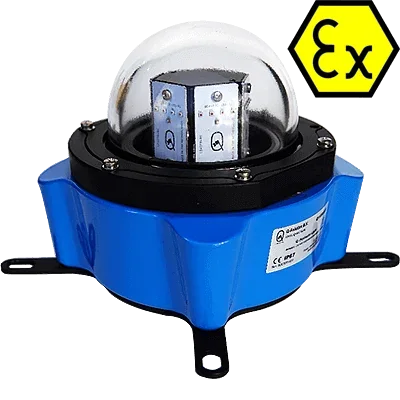
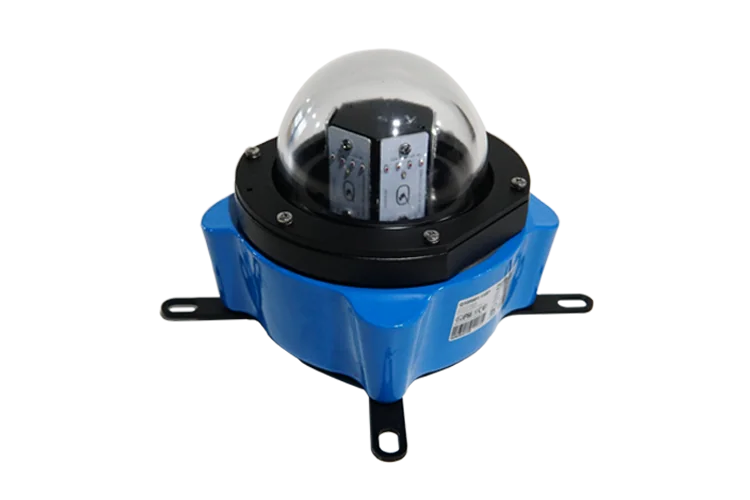
The 10 cd low-intensity Ex obstruction light, ICAO and CAP437 compliant.
Q-Aviation’s low-intensity obstruction light is a 10 candela unit compliant with ICAO and CAP437, in an explosion-proof construction for hazardous areas. It is the standard marking for lower obstacles and for structures already lit by higher-intensity units.
10 candela low-intensity class, per ICAO and CAP437
Low-intensity obstruction lights are the ones you see most of, and the reason is
straightforward: ICAO Annex 14 assigns them to lower obstacles, and most of what needs marking
on an installation is lower rather than higher. Q-Aviation state their low-intensity
obstruction light is a 10 candela unit compliant with ICAO and CAP437 - which matches the
figure this catalogue line is ordered against.
Ten candela is not much light, and that is deliberate. The purpose of a low-intensity light
is to be unmistakably visible at the distances relevant to a low obstacle, not to be bright.
Over-lighting an obstacle is a real fault rather than a harmless excess: it degrades a pilot's
night vision, it can wash out the higher-intensity lights that mark the more significant
hazards nearby, and on an offshore installation it interferes with the helideck lighting whose
pattern the pilot is actually flying to.
The explosion-proof construction is what makes this the offshore version rather than the
industrial one. These lights are mounted in the open on structures where flammable gas may be
present, so the light is certified equipment. Q-Aviation build both safe-area and
explosion-proof versions across their obstruction range, and on a mixed site the two are
specified from the same drawing - certified units inside the classified boundary, standard units
outside it.
Practically, these are fit-and-forget items that are hard to reach, which is why LED
construction matters more than the specification suggests. A lamp change at the top of a mast
or on a bridge pier is scaffolding, a permit or a boat, so the useful figure is service life
rather than intensity. Where a structure carries several of them, they are usually driven from
one control circuit so the whole marking scheme switches together and cannot end up half lit.
The zone, gas group and temperature class for the variant supplied are confirmed against your
classification drawing at quotation.
Features
10 candela, low intensity. Q-Aviation's published figure, matched to the
ICAO class for lower obstacles.
ICAO and CAP437 compliant. Marking specified against the standards, not
approximated.
Explosion proof. Certified for structures where flammable gas may be
present.
Correctly restrained output. Enough to be seen without degrading night
vision or washing out nearby higher-intensity marking.
LED service life. The figure that matters on a fitting reached only by
scaffolding, permit or boat.
Safe-area equivalents available. Same family for the unclassified parts of
a site.
Applications
The general-purpose obstruction light across an installation.
Platform handrails and walkways. Marking lower structure
extremities.
Bridge piers and abutments. Low-level obstacle marking.
Masts and antenna structures. Intermediate levels on a taller
structure.
Buildings and tanks. Roof-level marking within an obstacle limitation
surface.
Jack-up rigs and moving platforms. Marking that has to travel with the
structure.
PT Vivo Asia Teknologi Indonesia supplies weather and helideck monitoring as an
integrated, commissioned system rather than as individual instruments. Our scope typically
covers:
Selection against CAP 437, the relevant national requirement or your operator's standard.
Sensor siting to avoid the structure's own turbulence, exhaust and heat sources.
Signal, power and hazardous-area design across the deck and up to the control room.
Supply, installation, termination and commissioning.
Integration with the helideck monitoring system, status lighting and reporting outputs.
Calibration, periodic verification and ongoing maintenance.
Ranges, accuracies, approvals and electrical details vary by variant and are confirmed
against the current manufacturer datasheet at quotation stage. Tell us the structure, the
standard you are working to and the parameters you must report, and we will come back with
a system design and a full bill of materials.
Use the enquiry button above for a datasheet, a specification or a project quotation.

 1 / 3