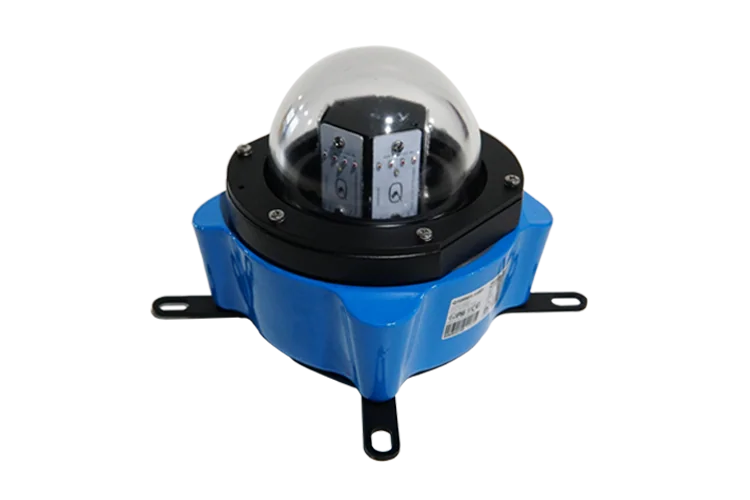
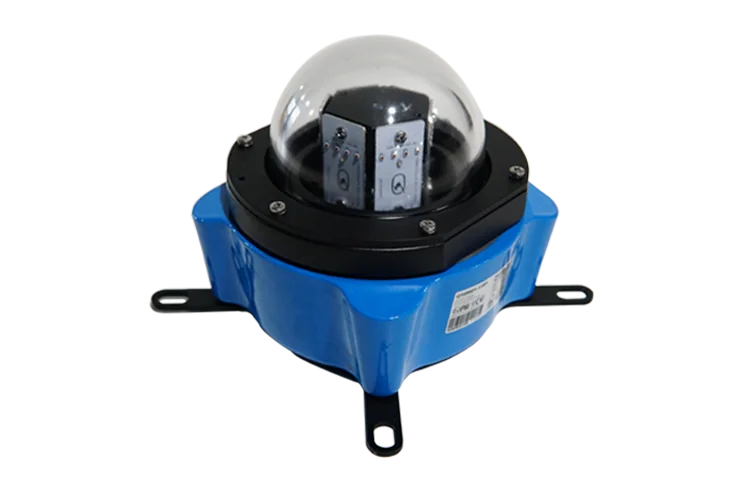
Q-Aviation Q64RI01 Explosion Proof TD/PM System D21+
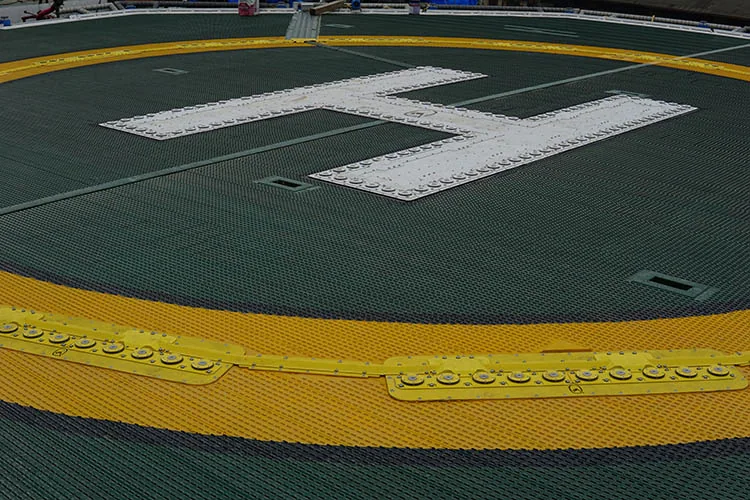
Circle and H lighting: at least 16 lit segments defining the touchdown marking.
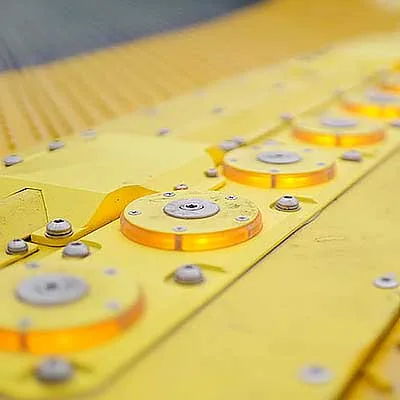
The TD/PM system lights the TouchDown Positioning Marking and the Lit Heliport Identification Marking, superimposed on the yellow painted marking of the helideck. It comprises a concentric circle of at least 16 discrete lighting segments, in an explosion-proof construction, for helidecks of D21 and above.
Concentric circle of at least 16 discrete lit segments
Lights the touchdown marking and the H identification
FunctionTD/PM circle and lit H identification marking
SegmentsAt least 16 discrete lighting segments
ArrangementSuperimposed on the yellow painted marking
ComplianceICAO Annex 14, CAP437
Description
A pilot landing on an offshore helideck at night is aiming at a painted circle they cannot
see. The touchdown and positioning marking - the yellow circle, with the H identification inside
it - is what defines where the aircraft should sit, and in daylight the paint does the job. At
night, or in poor visibility, it has to be lit.
The TD/PM system does that by building the marking out of light rather than illuminating the
paint. Q-Aviation describe it as Circle and H lighting comprising a concentric circle of at
least 16 discrete lighting segments, superimposed on the yellow painted marking, together with
the lit heliport identification marking. The result is that the geometry the pilot is flying to
is visible as itself: a circle of the correct diameter in the correct place, not a floodlit
approximation of one.
Segmented construction is what makes that work and what makes it survivable. Sixteen or more
separate segments mean the circle reads as a continuous shape from the air while remaining a set
of individually replaceable units on the deck, so one failed segment degrades the marking
slightly instead of breaking it. It also means the assembly tolerates a deck that flexes and
gets walked on, which a single continuous fitting would not.
The D21+ designation refers to the helideck's D-value - the largest overall dimension of the
helicopter the deck is designed for - so this is the configuration for decks sized at 21 metres
and above. The circle's diameter is set by the deck, which is why the system is specified per
deck size rather than sold as one part number: a circle of the wrong diameter is worse than
useless, because it tells the pilot the deck is a different size than it is.
Being explosion-proof is a requirement rather than an option here. This equipment is
installed in the deck surface of a hydrocarbon facility, in the open, and it is walked on and
washed down. It is controlled as a group from the helideck control system - in Q-Aviation's
range the WEX4 and WEX5 control systems carry dedicated groups for the TD/PM system alongside
the status light system - so the marking is switched with the rest of the helideck lighting
rather than separately.
Features
At least 16 discrete segments. Reads as a continuous circle from the air
while staying individually replaceable on deck.
Lights the marking itself. The circle and H are formed of light, not
floodlit paint.
Sized to the deck. D21+ configuration, because the circle diameter must
match the helideck's D-value.
Explosion proof. Deck-mounted equipment on a hydrocarbon facility, walked
on and washed down.
Graceful degradation. One failed segment dims the marking rather than
breaking its geometry.
Controlled as a group. Dedicated TD/PM groups on the WEX4 and WEX5
control systems.
ICAO Annex 14 and CAP437. The standards Q-Aviation build the range
to.
Applications
Lit touchdown marking is standard on any helideck used at night.
Offshore platform helidecks. Fixed installations with night
operations.
FPSOs and drillships. Where the deck is in use around the clock.
Semi-submersibles and jack-ups. Decks at D21 and above.
Vessel helidecks. Support and construction vessels.
CAP437 upgrades. Bringing an existing deck up to current lighting
requirements.
Deck refurbishments. Where the marking is repainted and relit
together.
Support & Documents
PT Vivo Asia Teknologi Indonesia supplies weather and helideck monitoring as an
integrated, commissioned system rather than as individual instruments. Our scope typically
covers:
Selection against CAP 437, the relevant national requirement or your operator's standard.
Sensor siting to avoid the structure's own turbulence, exhaust and heat sources.
Signal, power and hazardous-area design across the deck and up to the control room.
Supply, installation, termination and commissioning.
Integration with the helideck monitoring system, status lighting and reporting outputs.
Calibration, periodic verification and ongoing maintenance.
Ranges, accuracies, approvals and electrical details vary by variant and are confirmed
against the current manufacturer datasheet at quotation stage. Tell us the structure, the
standard you are working to and the parameters you must report, and we will come back with
a system design and a full bill of materials.
Use the enquiry button above for a datasheet, a specification or a project quotation.

 1 / 4