Recording radio traffic is not an optional refinement of an offshore aviation operation. When
a helicopter movement goes wrong, or nearly does, the recording of what was said and when is the
primary evidence - for the investigation, for the regulator, and for the operator's own learning.
That is why the recorder is a compliance item with its own standards rather than a convenience.
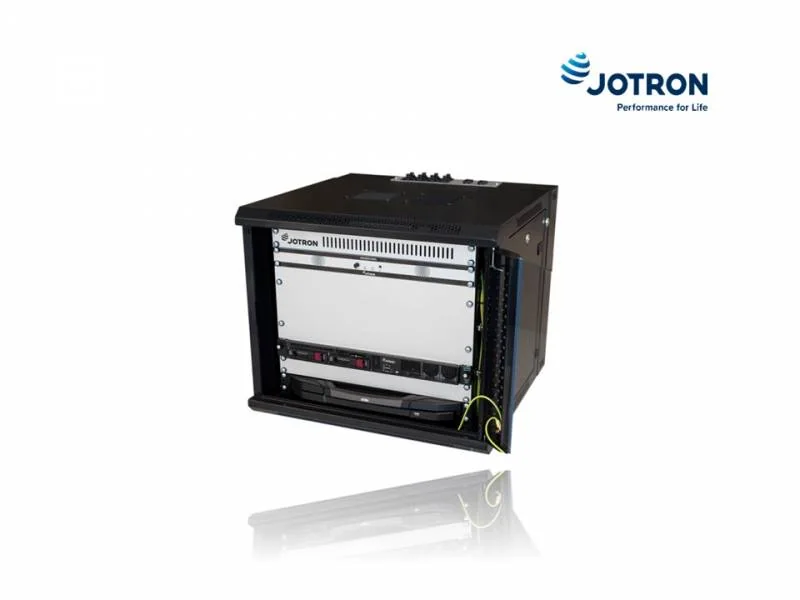
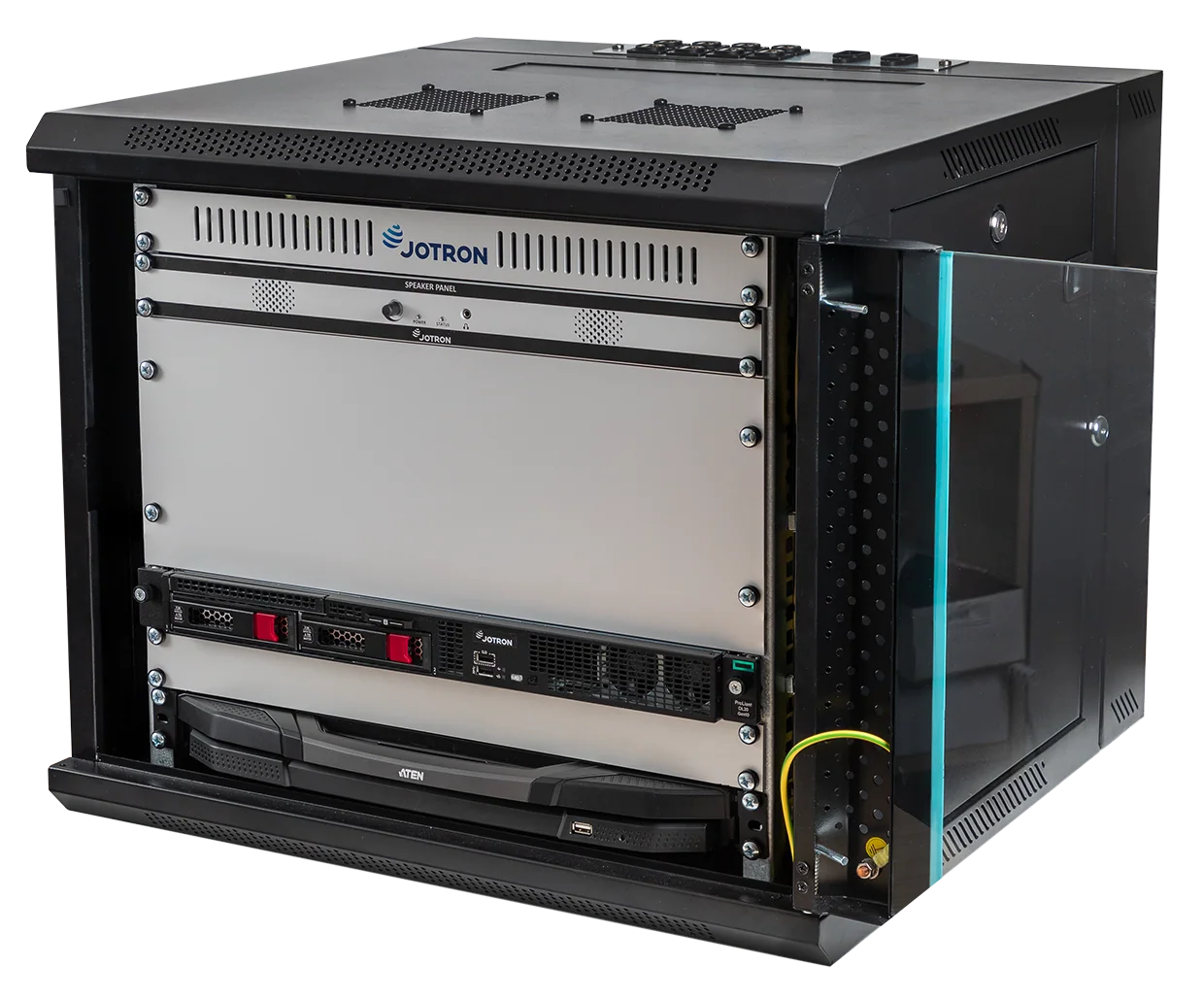
Jotron built SmartOil for exactly this niche: small onshore and offshore air traffic control
operations, and communication between helicopters, offshore platforms and vessels. The
distinction from a large ATC recorder matters. A platform's radio room has a handful of
positions, not fifty, and the equipment has to be installed and maintained by people whose main
job is something else - so a system scaled and packaged for a major airport is the wrong tool
even where it would technically work.
The channel capacity reflects that scaling. A single system records up to 8 analogue audio
channels, 22 digital audio channels over VoIP to ED-137, and 3 CCTV cameras. ED-137 is the
EUROCAE standard for voice over IP in air traffic management, and its presence is the important
detail: it means the recorder captures VoIP radio and telephone traffic natively as digital
streams rather than tapping analogue audio out of a converted signal, which is both cleaner
evidence and a better fit for a modern radio installation. Where more capacity is needed, Jotron
state that up to 60 audio channels and 6 CCTV cameras can be achieved using two servers, so the
system extends without being replaced.
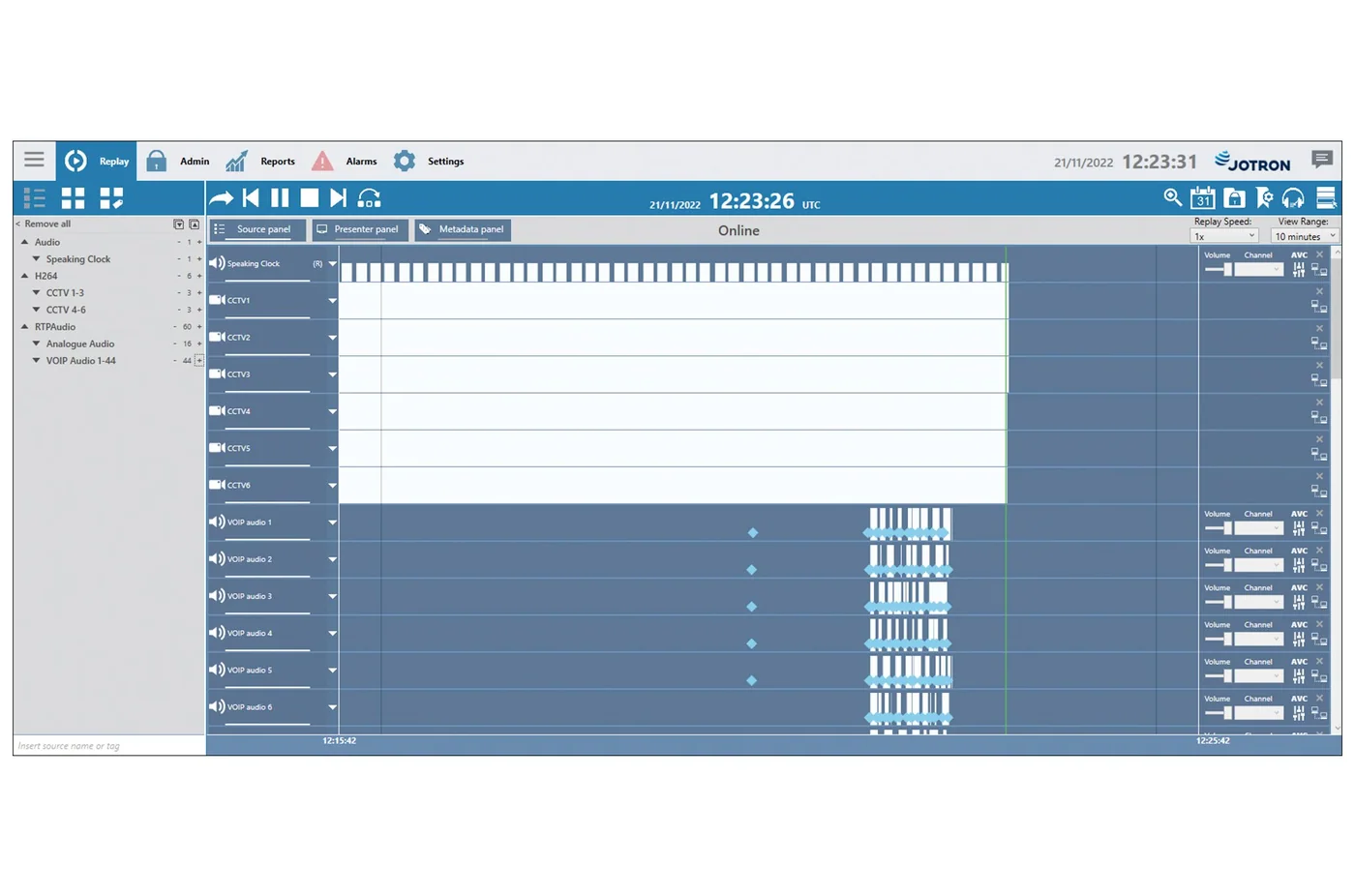
Recording CCTV alongside audio in the same system is the feature most worth having. In an
incident review, the useful question is not what was said or what was seen but how the two lined
up - what the deck looked like at the moment a transmission was made. Jotron provide instant
synchronous replay access with integrated replay and data management, so audio and video come
back together on one timeline. Assembling that afterwards from two separate systems with two
different clocks is the alternative, and it is painful.
NORSOK T-101 compliance is the credential to note for work in the Norwegian sector and for
anyone using NORSOK as a specification basis, which is common well beyond Norway. Jotron also
state the system is tested and verified to integrate easily with their TR-7750 and TR-810/910
radios - and the TR-910 offshore radio appears elsewhere in this catalogue, so a site running
Jotron radio has a recorder proven against it rather than merely compatible in principle.
Jotron design it so an operator can install, operate, maintain and replay all recorded data,
which on an unmanned or lightly manned installation is the difference between a working system
and one that quietly stopped recording months ago.

 1 / 3