The single most common complaint about a meeting room is that the far end cannot be heard
properly, and the usual cause is that the audio is coming out of a television. Display speakers
are an afterthought in the industry that makes displays: they are small, they fire backwards or
downwards into the wall, and they are tuned for programme material rather than for speech. In a
room with any hard surfaces the result is intelligible if you concentrate, which over an hour is
tiring, and which is why people end up on their phones instead.
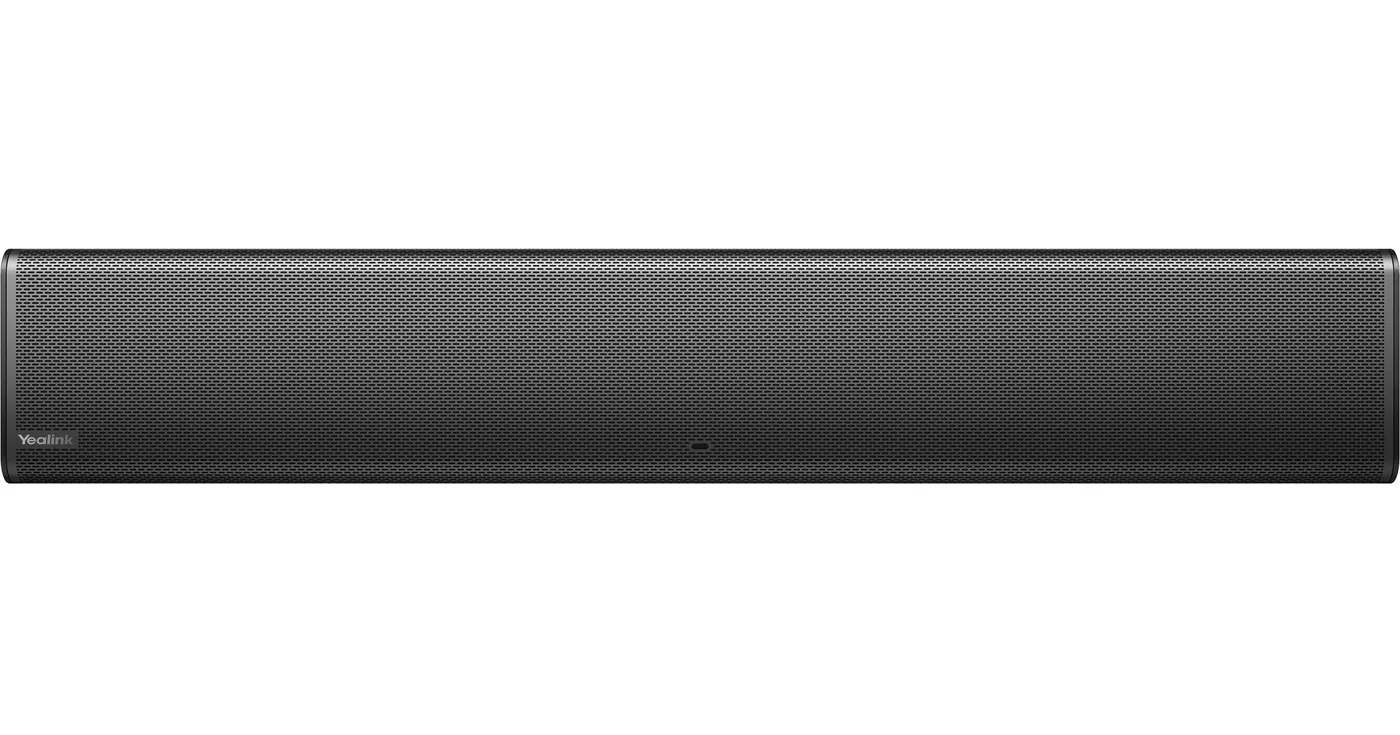
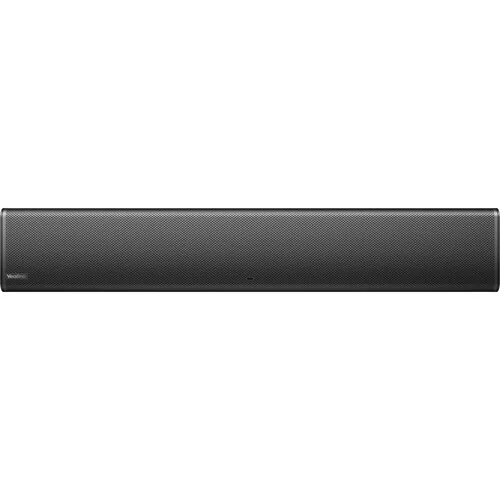
A dedicated soundbar fixes it by pointing a properly sized driver pair at the room. The
MSpeaker II is rated at 10 W RMS with stereo speakers and a frequency response of 100 Hz to
20 kHz. The number worth reading there is the low end: speech intelligibility depends on the
lower midrange being present, and a small display speaker that rolls off early makes voices
thin and hard to follow. A response reaching down to 100 Hz gives speech the body it needs to
carry across a room.
Connection is deliberately simple, which is the right choice for a room device. It takes a
3.5 mm line-in, so it will work with essentially anything that has an audio output, and it also
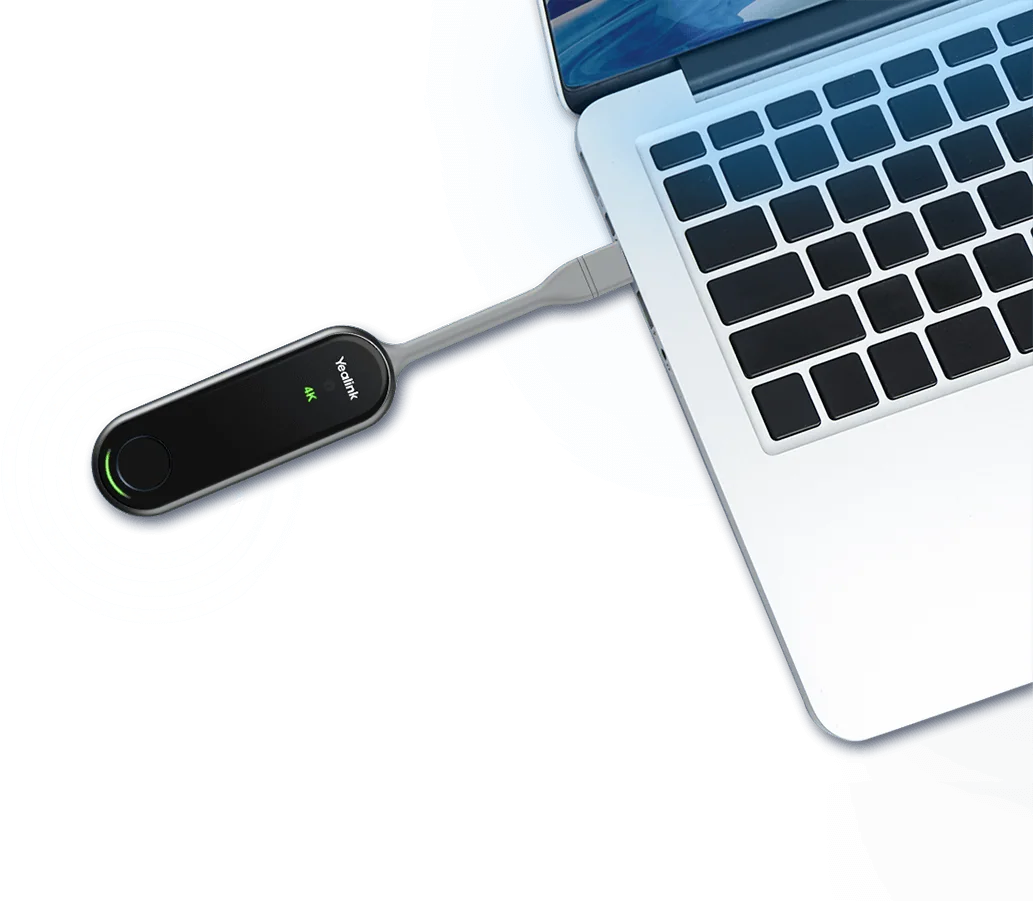
accepts VCH input over Power over Ethernet - meaning that where a Yealink VCH sharing box is
part of the room, the soundbar takes both its signal and its power from it and needs no separate
supply at the display. On a wall-mounted display that removes a power outlet from the
requirement, which is more helpful than it sounds when the display is already fed by one cable
through a wall.
Physically it is 500 mm wide, 60 mm deep and 86 mm high, which is the proportion of a bar
intended to sit directly under a display rather than to be a piece of furniture. Operating
temperature is 0 to 40 degrees C, so it belongs in a conditioned room rather than a plant
area.
One thing to be clear about: this is a speaker, not a speakerphone. It handles the outbound
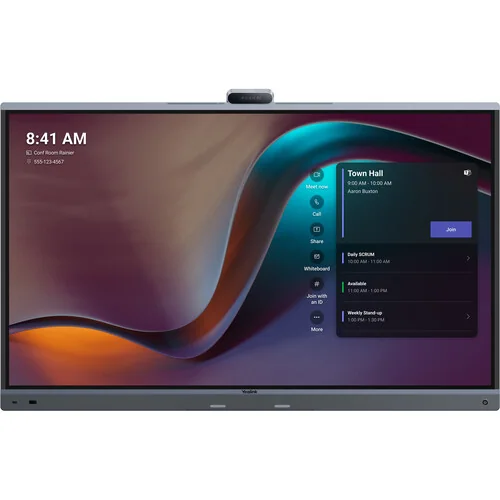
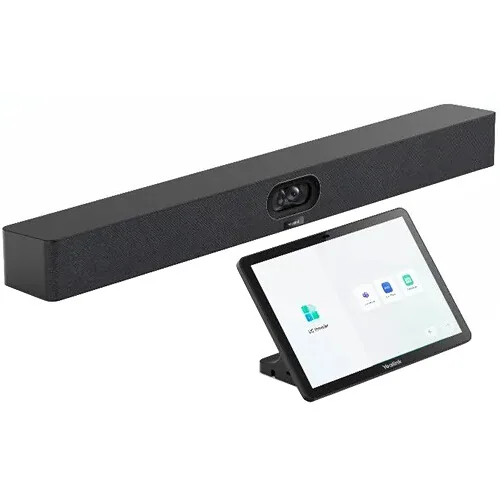
direction only. Microphones are separate - built into the video bar, the MeetingBoard or an
expansion microphone on the table - so a room specification needs both halves considered. Where
the room already has a capable video bar with its own speakers, this is not needed; where the
room is large, or the display is the only audio path, it is what makes the room work.

 1 / 2